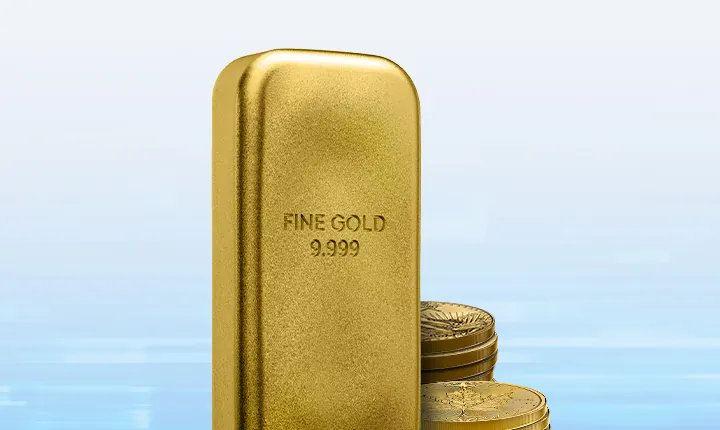
Gold ETFs vs. Digital Gold: What's the Difference?


Gold ETFs and Digital Gold: Two Routes to the Same Metal
Both gold ETFs and digital gold give European and UK investors exposure to the gold price without storing a coin or bar at home. But the two products are structured very differently, and those differences matter for what you actually own, what you pay over time, and what happens in a crisis. This guide compares them in detail for a GBP, EUR or CHF investor, with concrete fees, tax treatment under EU and UK rules, and worked examples. If you are still weighing physical metal against funds more broadly, our companion piece on gold ETFs vs physical gold covers that ground first.
The short version: a gold ETF is a security you hold through a broker; digital gold is a fractional claim on a specific quantity of bullion sitting in a vault. The first is a financial wrapper around gold; the second is gold ownership made convenient.
What Is a Gold ETF?
A gold ETF (exchange-traded fund, or more precisely an exchange-traded commodity in Europe) is a fund listed on a stock exchange that aims to track the gold price. When you buy a share, you own a unit of the fund, not the underlying metal. The fund itself holds gold bars, usually LBMA Good Delivery bars in a custodian vault, and the share price moves with the value of that holding minus the fund's annual fee.
For European and UK investors the relevant products are typically physically-backed ETCs domiciled in Europe (UCITS-eligible exposure), traded in GBP, EUR or CHF on exchanges such as the London Stock Exchange, Xetra or SIX. US-listed ETFs exist but are generally less practical for UK and EU investors due to currency, withholding and access considerations.
Common Gold ETFs and Their Costs
Expense ratios are charged annually as a percentage of assets and are deducted continuously from the fund's value, so you never see a separate invoice. The figures below are approximate and should be confirmed against each provider's current factsheet before you invest.
| Ticker / Fund | Type | Approx. annual fee |
|---|---|---|
| SGLN (iShares Physical Gold ETC) | Physically backed, LSE-listed (GBP) | ~0.12% |
| SGLD / PHAU (Invesco / WisdomTree Physical Gold) | Physically backed, European-listed | ~0.12%–0.39% |
| GLD (SPDR Gold Shares) | Physically backed, US-listed | ~0.40% |
| IAU (iShares Gold Trust) | Physically backed, US-listed | ~0.25% |
| SGOL (abrdn Physical Gold) | Physically backed, Swiss-vaulted | ~0.17% |
European-domiciled physical ETCs like SGLN and SGLD have driven fees down considerably, while older US giants such as GLD remain more expensive. Note that the lowest-fee gold ETFs are usually physically backed; synthetic or futures-based products introduce additional complexity and counterparty exposure. For a fuller ranking see our guide to the best gold ETFs.
What Is Digital Gold?
Digital gold lets you buy fractional amounts of physical bullion that is fully allocated to you and held in an insured, professional vault. "Allocated" is the key word: the metal is your legal property, recorded in your name, and is not part of the platform's balance sheet. If the platform fails, allocated metal does not become an asset that creditors can claim, because it was never the platform's to begin with.
With vaulted gold from a provider like OneGold you can buy from very small amounts, choose your vault jurisdiction, track the live gold price, and in many cases convert holdings into deliverable coins or bars later. Because there is no fund wrapper, there is no fund management company sitting between you and the metal.
How Vaulting and Jurisdiction Work
One advantage of allocated digital gold over an ETF is that you usually choose where your metal sits. Each jurisdiction has its own appeal:
- United Kingdom (London): the heart of the LBMA wholesale market and Good Delivery system; deep liquidity and tight pricing.
- Switzerland (Zurich): long-standing neutrality, strong vaulting tradition and political stability — a perennial favourite for wealth preservation.
- United States and Canada: also available for investors who want North American storage, though European investors typically favour the UK and Switzerland.
- Allocated vs pooled: insist on allocated (segregated, identifiable) metal rather than pooled or unallocated claims, which behave more like an IOU.
Head-to-Head: ETFs vs Digital Gold
The table below summarises the practical differences for a European or UK investor.
| Factor | Gold ETF / ETC | Allocated digital gold |
|---|---|---|
| What you own | Shares in a fund | Title to specific physical metal |
| Ongoing cost | Annual expense ratio (~0.12%–0.40%) | Storage/insurance fee (typically ~0.10%–0.30%) |
| Counterparty risk | Fund, custodian, authorised participants | Minimal where metal is fully allocated |
| Trading hours | Exchange hours only | Often available outside exchange hours |
| Can take physical delivery? | Rarely, and usually only in large bar sizes | Frequently — convert to coins/bars |
| Dealing costs | Broker commission + bid/offer spread | Buy/sell spread on the platform |
Neither product is universally "better" — the right choice depends on whether you prioritise the familiarity of a brokerage account or direct ownership of the metal itself. For a broader framework see the best way to buy gold.
Fees and a Worked Example
Because both products charge a small annual percentage, the cost gap is modest in any single year but compounds over time. Consider a £20,000 holding left untouched for ten years, ignoring price movement for clarity:
- ETF at 0.25%: roughly £50 in year one, and on the order of £500 cumulatively over a decade (more if the value rises).
- Digital gold at 0.15% storage: roughly £30 in year one, around £300 cumulatively over the same period.
- Takeaway: the headline difference is small in cash terms, so cost alone rarely decides the question. Ownership structure, delivery optionality and counterparty risk usually matter more.
Liquidity, Spreads and Switching
Gold ETFs are highly liquid during exchange hours, with tight spreads on large funds, but you pay a broker commission on each trade and can only deal when the market is open. Allocated digital gold platforms typically let you buy and sell against the live spot price across extended hours, with the cost embedded in a buy/sell spread rather than a separate commission.
A genuinely useful feature of some digital platforms is the ability to switch between metals — for example rotating part of a gold position into silver or platinum — without first cashing out to currency. You can also place limit orders to buy at a target price rather than chasing the market.
Tax and VAT for EU and UK Investors
Investment gold is VAT-exempt across the EU and the UK. Under the EU's investment-gold exemption and the equivalent UK rules, bullion that meets the investment-gold definition (bars and coins of the required purity) is free of VAT. Crucially, this exemption is specific to gold: silver and platinum generally do carry VAT (commonly around 19%–20% on the continent), which is a major reason gold remains the most tax-efficient metal to hold physically.
Both gold ETFs and allocated digital gold sit on the right side of that VAT line, so VAT is rarely the deciding factor between them. Capital gains treatment, however, varies widely by country of residence — some jurisdictions exempt long-held physical gold while taxing fund gains, others treat them alike. Always confirm the rules for your own residence, ideally with a qualified adviser, before assuming one wrapper is more efficient than the other.
Risks and Things to Check
No gold holding is risk-free, and the gold price itself can fall as well as rise. Beyond market risk, the structural risks differ by product:
- ETF counterparty layers: a fund relies on a custodian, a management company and authorised participants; check whether it is physically backed or synthetic.
- Digital gold provenance: confirm the metal is fully allocated, LBMA Good Delivery where applicable, independently audited and insured.
- Spreads and fees: compare the all-in cost — annual fee plus dealing spread plus any broker commission — not just the headline expense ratio.
- Platform due diligence: review the provider's vault partners, audit reports and regulatory standing before committing funds.
Which Should You Choose?
If you already manage everything inside a brokerage account and simply want price exposure, a low-cost European-listed gold ETF such as SGLN is a clean, familiar option. If you want to own the metal itself — with the ability to choose your vault jurisdiction, minimise counterparty risk, and potentially take delivery later — allocated digital gold is the more direct route. Many investors hold both. To see where to open an account and compare providers, read our overview of where to buy gold, and learn how the buying process works with our how it works guide.
This article is for general education only and is not investment, tax or legal advice. The value of gold can go down as well as up. Tax treatment depends on your individual circumstances and may change. Consider seeking advice from a qualified professional before investing.
Frequently asked questions
Do I pay VAT on a gold ETF or digital gold in the UK or EU?
Is digital gold safer than a gold ETF?
Which is cheaper to hold over the long term?
Can I take physical delivery of my gold?
Where is my gold stored with a digital gold provider?
Can I switch from gold into silver or platinum without selling to cash first?
Ready to start investing?
Open a free OneGold account and own allocated, fully insured metal in minutes.
Start Investing