Best Way to Buy Gold


How to Choose the Best Way to Buy Gold
There is no single "best" way to buy gold — only the way that best fits your goals, time horizon, budget and appetite for handling metal yourself. A UK or European investor buying gold as long-term wealth insurance will weigh the decision very differently from someone seeking a quick, liquid trade. Before comparing formats, it helps to be clear on a few fundamentals that genuinely move the needle: total cost of ownership (premium over spot plus storage), liquidity (how quickly and cheaply you can sell), ownership type (allocated metal you own outright versus a paper claim), and tax treatment in your jurisdiction.
The good news for European and UK buyers is that investment-grade gold is exempt from VAT across the EU and the UK. Gold bullion meeting the legal purity threshold (a fineness of at least 995 thousandths for bars, 900 for coins minted after 1800 and traded near their gold value) carries no VAT, which is not true of silver, platinum or palladium. That single fact makes gold the most cost-efficient precious metal to accumulate in Europe, and it shapes much of the guidance below. If you are completely new to the topic, our beginner's guide to investing in gold covers the groundwork in plain language.
Buying Physical Gold
Physical gold means metal you can hold — bars, coins or rounds. It offers direct ownership with no counterparty between you and the asset, which is precisely why many investors hold it. The trade-off is the premium you pay over the live gold price, plus the practical burden of storage and insurance. As a rule of thumb, the smaller the unit, the higher the premium per gram, because fabrication and handling costs are spread across less metal.
Gold Coins
Coins are government-minted, carry a legal-tender face value and are recognised worldwide, which makes them highly liquid and easy to resell. For UK investors, Britannias and Sovereigns have a particular advantage: as legal tender coins of the Royal Mint, gains on them are exempt from UK Capital Gains Tax for UK residents. Other popular bullion coins include the Krugerrand, Canadian Maple Leaf and Austrian Philharmonic — the latter denominated in euro and a staple for Eurozone buyers. Expect premiums of roughly 3–7% over spot for a one-ounce coin, with smaller fractional coins costing proportionally more.
Gold Bars
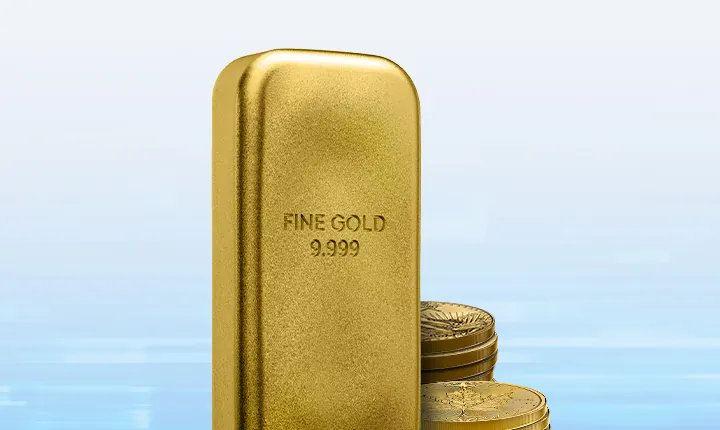
Bars give you the most metal for your money. A one-ounce or larger bar from an LBMA Good Delivery refiner — names such as PAMP, Valcambi, Argor-Heraeus or the Royal Mint — typically carries a premium of only around 1–4% over spot, falling as bar size rises. The catch is liquidity at the high end: a 1 kg bar is cost-efficient to buy but harder to sell in part, since you cannot break off a few grams. Always insist on bars accompanied by an assay certificate and, ideally, tamper-evident packaging (the CertiPAMP or Veriscan format), as this preserves resale value.
Gold Rounds
Rounds are privately minted discs that resemble coins but are not legal tender. Because they skip the sovereign minting premium, they are usually cheaper than coins and sit close to bar pricing. The downside is recognition: a generic round from a lesser-known mint can be marginally harder to sell and may not qualify for the coin-specific tax reliefs that UK Sovereigns and Britannias enjoy. Rounds suit cost-focused stackers who plan to hold rather than trade frequently.
Physical Gold Storage and Best Practices
Once you own metal, you must store it safely — and storage is part of the true cost of physical gold. There are three broad routes:
- Home storage: a quality safe gives instant access and no ongoing fee, but check that your household insurance covers bullion — many policies cap precious-metal cover at a low figure unless separately declared.
- Bank safe deposit box: discreet and secure, but contents are generally not insured by the bank, access is limited to opening hours, and availability has shrunk as many banks have withdrawn the service.
- Professional vault storage: specialist vaults in jurisdictions such as the UK and Switzerland (with US and Canadian vaulting also available) offer LBMA-grade security, full insurance and segregated or allocated holdings, typically for an annual fee of around 0.1–0.5% of value.
Investing in Gold ETFs
Exchange-traded products track the gold price and trade on stock exchanges like a share, settling instantly through your broker with no storage to arrange. For European investors it is worth distinguishing the well-known US-listed funds — many of which are not freely available to EU retail buyers under PRIIPs rules — from UCITS-compliant European listings that are. The most relevant choice is between physically backed products, which hold allocated bars in a vault, and synthetic ones, which use derivatives and carry counterparty risk.
| Product | Ticker | Approx. expense ratio | Structure |
|---|---|---|---|
| SPDR Gold Shares | GLD | ~0.40% | US-listed, physically backed |
| iShares Gold Trust | IAU | ~0.25% | US-listed, physically backed |
| abrdn Physical Gold Shares | SGOL | ~0.17% | Swiss-vaulted, physically backed |
| VanEck Merk Gold | OUNZ | ~0.25% | Physically backed, deliverable |
The key limitation is that an ETF holding is, for most investors, a paper claim rather than metal you can take in hand, and you pay the expense ratio every year you hold. For a fuller comparison see gold ETFs versus physical gold, our pick of the best gold ETFs, and the reasons some investors avoid gold ETFs altogether.
Trading Gold Futures
Gold futures are standardised contracts to buy or sell a fixed quantity of gold at a set price on a future date, traded on venues such as the COMEX. They offer leverage and deep liquidity, which appeals to professional traders and hedgers. For the typical long-term investor, however, futures are rarely the best way to own gold: they require a margin account, expire and must be rolled, and that leverage cuts both ways — a small adverse move in the spot gold price can wipe out your stake. Treat futures as a trading tool, not a store of wealth, and only after you understand margin calls and contango.
Digital and Vaulted Gold
Vaulted (digital) gold aims to capture the best of both worlds: you own allocated, fully insured physical metal held in a professional vault, but you buy and sell it instantly online, often from a fraction of a gram. Unlike an ETF, the gold is legally yours — not a fund unit — and unlike a coin in a drawer, you avoid the wide retail buy/sell spread and the hassle of storage and insurance. Pricing typically tracks spot closely, with a small premium and a modest annual storage fee, and many platforms let you choose your vault jurisdiction — for European investors typically the UK and Switzerland, with the US and Canada also available.
- Allocation matters: insist on allocated metal (specific bars assigned to you) rather than unallocated pooled claims, which rank as a creditor position if the provider fails.
- LBMA Good Delivery: reputable platforms vault only LBMA-accredited bars, preserving full resale liquidity.
- Redemption rights: the best services let you take physical delivery of bars or coins if you choose — see how redemption works in practice.
Comparing the Options
The table below summarises the practical trade-offs for a European or UK investor. "Premium/cost" is the typical gap between what you pay and the live spot price, before any annual fees.
| Method | Typical cost over spot | Ownership | Liquidity | Best for |
|---|---|---|---|---|
| Bars | ~1–4% | Direct physical | Good (whole units) | Lump-sum, long hold |
| Coins | ~3–7% | Direct physical | Very good | Flexibility, UK CGT relief |
| ETFs | ~0.2–0.4% p.a. | Fund unit (paper) | Excellent | Trading within a portfolio |
| Futures | Margin + roll costs | Contract | Excellent | Short-term trading, hedging |
| Vaulted/digital | Low premium + ~0.1–0.5% p.a. | Allocated physical | Excellent | Accumulating insured metal |
A worked example: investing GBP 10,000 in a 1 kg LBMA bar at a 2% premium costs about GBP 200 in premium with no annual fee, but is hard to sell in part. The same GBP 10,000 in vaulted gold might carry a smaller premium plus roughly GBP 10–50 a year in storage, while letting you sell any amount at the click of a button — a meaningful advantage if you value liquidity and divisibility.
Buying Smarter: Tools and Timing
Whichever format you choose, a few habits reduce cost and improve discipline. Rather than trying to time a single perfect entry, many investors buy in regular instalments to average their entry price. Tools can help you act at the right moment: a limit order lets you set a target buy price in advance, while a gold price alert notifies you when the market reaches a level you care about. If you already hold higher-cost coins or an expensive fund, a switch-and-save review can show whether moving to lower-premium vaulted metal would cut your ongoing costs.
How OneGold Fits In
OneGold provides access to fully allocated, insured gold stored in LBMA-grade vaults in the UK and Switzerland — with US and Canadian vaulting also available — with no minimum investment and pricing that tracks the live market closely. You can buy from a fraction of an ounce, sell back instantly, or take physical delivery — combining the security of owning real metal with the convenience of trading online. To see the mechanics end to end, read how it works, and if you are still weighing where to buy, our guide on where you can buy gold compares the main routes.
A note on risk: the price of gold can fall as well as rise, gold pays no income or dividend, and past performance is no guide to the future. This article is general information for European and UK investors, not personal financial, tax or investment advice. Tax treatment depends on your individual circumstances and may change; confirm your position with a qualified adviser before committing capital.
Frequently asked questions
Do I pay VAT when buying gold in the UK or EU?
What is the cheapest way to buy gold over the long term?
Is a gold ETF the same as owning gold?
Where is the safest place to store vaulted gold in Europe?
Are gold coins tax-free for UK investors?
How much should I invest in gold?
Ready to start investing?
Open a free OneGold account and own allocated, fully insured metal in minutes.
Start Investing