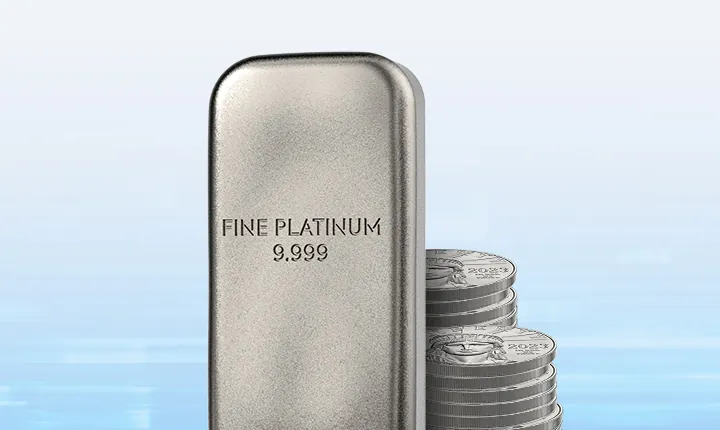
Where Can I Buy Platinum?


Why Investors Consider Platinum
Platinum is one of the rarest precious metals on earth — annual mine supply is a small fraction of gold's, concentrated largely in South Africa and Russia. That scarcity, combined with heavy industrial demand, gives platinum a distinct profile compared with the more familiar monetary metals.
A dual-purpose metal. Roughly two-thirds of platinum demand comes from industry, above all autocatalysts in diesel and hybrid vehicles, plus chemical, glass, electronics and medical uses. The remainder is split between jewellery and investment. This means the platinum price tends to track the industrial cycle as much as the safe-haven flows that drive gold, so it can behave quite differently in a portfolio.
For European and UK investors, platinum is often held as a diversifier and a contrarian value play rather than a core monetary holding. If you are still weighing the metals against one another, our companion guides on where to buy gold and the silver guide are a useful starting point before committing capital to platinum.
Where Can You Buy Platinum in Europe and the UK?
There are four broad routes to platinum exposure. Each carries its own cost structure, liquidity and storage implications, and the right choice depends on whether you want metal in hand, low ongoing cost, or institutional-grade vaulting.
- Online bullion dealers — established merchants ship LBMA-recognised platinum bars and coins across the EU and UK. Convenient and competitively priced, but you take on delivery, insurance and home-storage risk.
- Local coin and bullion shops — useful for inspecting product in person and for small purchases, though premiums are usually higher and stock is limited.
- Banks — a handful of Swiss, German and Austrian banks still sell physical platinum, but spreads are typically wide and many high-street banks have exited bullion entirely.
- Digital / vaulted platinum platforms — services such as OneGold let you buy fractional, fully allocated vaulted platinum held in professional vaults, with live pricing and low storage fees. This combines tight spreads with institutional custody.
The VAT Question: Why Platinum Differs From Gold
This is the single most important point for European buyers. Under EU and UK rules, investment gold is exempt from VAT. Platinum and silver are not. Physical platinum bullion is generally treated as a standard-rated good, so a coin or bar bought for delivery in the UK or most EU states can attract VAT at the local rate (for example, 20% in the UK and Germany, 21% in many other member states).
That VAT is effectively a sunk cost you only recover if you later sell into a market that prices it back in — which is far from guaranteed. It is the main reason a worked platinum purchase can look expensive against gold.
How vaulting changes the maths. Platinum stored in an accredited vault within a customs-bonded or free-trade jurisdiction — Switzerland (outside the EU VAT area) being the classic example, with the United Kingdom also widely used — can typically be bought and held without triggering VAT, because the metal never enters domestic consumption. This is a key practical advantage of buying vaulted platinum rather than taking delivery. Tax treatment is personal and jurisdiction-specific, so confirm your position with a qualified adviser before committing.
Physical Platinum: Bars, Coins and Digital Compared
Form factor drives both your upfront premium and how easily you can sell later. Bars carry the lowest premium per ounce; sovereign coins cost more but are instantly recognisable and highly liquid; digital vaulted ounces sidestep delivery and VAT friction altogether while remaining fully allocated to you.
| Format | Typical premium over spot | VAT (delivered, UK/EU) | Liquidity | Storage |
|---|---|---|---|---|
| Cast/minted bars (e.g. 1 oz, 100 g) | Low (approx. 4–8%) | Usually applies | Good via dealers | Your responsibility |
| Sovereign coins (Platinum Britannia, Maple Leaf, Eagle) | Higher (approx. 6–12%) | Usually applies | Excellent, globally recognised | Your responsibility |
| Vaulted / digital platinum | Lowest (tight spread to spot) | Avoidable via bonded vault | High, sell back instantly | Insured, allocated vault |
Premiums are indicative and move with demand; always check the live dealer buy/sell quote before transacting against the prevailing platinum price.
Platinum ETFs and ETCs as an Alternative
If you prefer a brokerage holding to physical metal, physically backed platinum exchange-traded products give cost-efficient exposure. In the US-listed market the best-known are the abrdn Physical Platinum Shares ETF (PPLT), with an expense ratio of approximately 0.60%, and the GraniteShares Platinum Trust (PLTM) at roughly 0.50%. European investors more commonly access platinum through UCITS-eligible ETCs such as WisdomTree Physical Platinum (ticker PHPT), which carries a management fee in the region of 0.49% and is backed by allocated metal in LBMA-approved London vaults.
ETPs offer excellent intraday liquidity and no home-storage burden, but you hold a security rather than the metal itself, and you continue to pay the annual fee regardless of price direction. For a deeper comparison of the leading products, see our dedicated guide to the best platinum ETF options, and the broader debate on ETFs versus digital metal applies equally to platinum.
What to Look For in a Platinum Vendor
Because platinum is a YMYL purchase — your money is at stake — vendor due diligence matters as much as the headline price. Run any dealer or platform through the following checklist before funding an account.
- Accreditation and metal quality — bars and coins should be from LBMA Good Delivery refiners or recognised sovereign mints, guaranteeing purity (typically 999.5 fine platinum).
- Transparent, real-time pricing — the buy/sell spread should be visible and quoted against live spot, not buried in opaque fees.
- Allocated, insured storage — confirm metal is fully allocated to you (not pooled or a paper claim) and held in audited vaults in trusted jurisdictions — for European investors, principally the UK and Switzerland, with US and Canadian vaulting also available.
- A genuine buyback policy — check you can sell back easily and at a fair spread; illiquid exit is a common hidden cost.
- Regulatory standing and reputation — verify the firm's registration, longevity and independent reviews before transferring funds.
How to Buy Platinum, Step by Step
- Decide your format — physical bars/coins for possession, an ETC for brokerage convenience, or vaulted digital platinum for low-cost allocated ownership.
- Choose a reputable dealer or platform using the vendor checklist above.
- Compare the all-in cost — spot price plus premium or spread, plus any VAT, shipping, insurance and ongoing storage fees.
- Time your entry — fund the account and either buy at market or set a target with limit orders so you execute only at your chosen price.
- Arrange storage and keep records — confirm vault allocation or secure home storage, and retain documentation for resale and tax purposes.
A Worked Example: Delivery vs. Vaulted
Suppose platinum trades at £760 per ounce. Buying a 1 oz coin for UK delivery, you might pay an 8% premium plus 20% VAT — pushing the all-in cost toward roughly £985 before shipping. To break even on resale you would need the platinum price to rise materially, simply to recover the VAT and premium.
Buying the same ounce as fully allocated vaulted platinum in a bonded Swiss vault, you might pay a spread of well under 1% to spot and an annual storage fee in the region of 0.10–0.15%, with no VAT triggered. The narrower entry cost means your investment starts working far closer to the spot price — a meaningful difference compounded across a larger holding.
Liquidity, Spreads and Holding Risk
Platinum is a smaller, thinner market than gold, so spreads can widen during volatile periods and price swings can be sharper. Its industrial bias means a downturn in vehicle production or a shift in autocatalyst technology can weigh on demand independently of investor sentiment. That cuts both ways: platinum has spent long stretches trading below gold, which value-oriented investors view as an opportunity, but mean-reversion is never guaranteed.
Whatever route you choose, keep platinum proportionate within a diversified portfolio. If you later want to rebalance between metals, vaulted holdings make it straightforward to switch between metals or redeem for physical bars without the friction of selling delivered coins.
Disclaimer: This article is general information for European and UK investors, not financial, tax or investment advice. Precious metals can fall as well as rise in value, and VAT and tax treatment depend on your individual circumstances and jurisdiction. Consider seeking independent professional advice before investing.
Buying Platinum With OneGold
OneGold offers fully allocated, insured vaulted platinum held in professional vaults, priced in real time against the live platinum price, with no minimum investment and the ability to buy fractional ounces. You can review the mechanics of allocation, custody and redemption in our how it works overview before opening an account.
For investors who want the lowest-friction route into platinum — tight spreads, no VAT trigger on bonded-vault metal, and instant buyback — vaulted ownership is generally the most cost-effective option, with delivery available whenever you wish to take possession.
Frequently asked questions
Do I have to pay VAT on platinum in the UK or EU?
Where is the cheapest place to buy platinum in Europe?
Is platinum a better investment than gold?
What platinum ETFs are available to European investors?
How do I know the platinum I buy is genuine?
Can I sell vaulted platinum back easily?
Ready to start investing?
Open a free OneGold account and own allocated, fully insured metal in minutes.
Start Investing