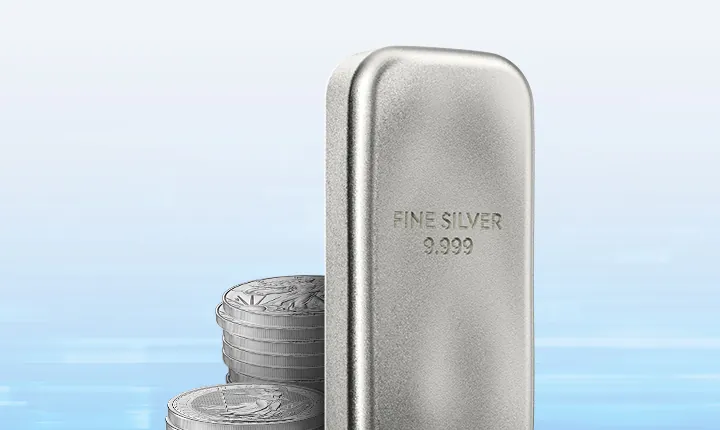
Silver Guide: Everything You Need to Know


Why Investors Buy Silver
Silver occupies an unusual position in the precious-metals world: it behaves partly like a monetary asset and partly like an industrial commodity. That dual character is the single most important thing for a European or UK investor to understand. Roughly half of annual silver demand comes from industry, which means silver prices respond not only to inflation fears and currency weakness but also to the manufacturing cycle, technology adoption, and global growth.
For investors, silver is often a first step into precious metals because the per-ounce price is a fraction of gold's. A position that would require a meaningful sum in vaulted gold can be built far more gradually in silver. The trade-off is volatility: silver routinely moves more sharply than gold in both directions, so it suits investors who can tolerate larger swings in pursuit of higher potential returns.
Industrial Silver Demand
Silver has more industrial applications than any other precious metal. Its exceptional electrical and thermal conductivity, reflectivity, and antibacterial properties make it difficult to substitute in many uses. This structural demand is what distinguishes silver from gold as an investment.
Key industrial drivers include:
- Solar (photovoltaics): silver paste is used in most solar cells, and the global build-out of renewable capacity has become a major source of new demand.
- Electronics: switches, connectors, circuit boards and 5G infrastructure all rely on silver's conductivity.
- Electric vehicles: EVs use significantly more silver than conventional cars across their electrical systems.
- Medical and water treatment: silver's antimicrobial qualities support its use in wound dressings, coatings and purification.
Investment Silver
As an investment, silver is valued for the same reasons as gold — it sits outside the banking system, cannot be printed, and has preserved purchasing power over very long horizons — but it tends to amplify those moves. In bull markets the gold-to-silver ratio (the number of ounces of silver needed to buy one ounce of gold) often compresses as silver outperforms; in downturns the ratio widens. Many investors watch this ratio as a rough gauge of relative value, and some use the switch and save approach to rotate between metals as the ratio shifts.
You can follow the live silver price in GBP, EUR or CHF before committing, and set a silver price alert so you are notified when your target level is reached rather than watching the market constantly.
VAT: The Critical EU and UK Difference
This is the point most new European investors overlook. Under EU and UK rules, investment-grade gold is exempt from VAT. Silver is not. In the UK, physical silver typically carries 20% VAT, and across the EU member states apply their standard VAT rate to silver coins and bars (with some variation and special schemes). This single fact materially changes the economics of buying physical silver versus gold.
A worked example makes it concrete: if you buy 1 kg of physical silver and pay 20% VAT on purchase, the silver price must rise by 20% before you even break even relative to gold's VAT-free treatment, ignoring premiums. This is why many European investors hold silver through VAT-efficient routes such as vaulted silver stored in a bonded facility, or through silver ETPs, rather than taking delivery of coins and bars at home.
Ways to Own Silver
There is no single "best" format — the right choice depends on how much VAT you are willing to absorb, whether you want physical possession, and how much you value liquidity. The table below compares the main options for a European or UK investor.
| Format | Typical premium / cost | VAT (EU/UK) | Liquidity |
|---|---|---|---|
| Silver coins (e.g. Britannia, Maple Leaf) | High (often 10–25% over spot) | Usually charged | Good, widely recognised |
| Silver bars | Lower (often 5–15% over spot) | Usually charged | Moderate; resale needs a dealer |
| Vaulted / digital silver | Low (small spread + storage fee) | Often avoidable while vaulted | High; sell instantly online |
| Silver ETPs / ETCs | Expense ratio ~0.20–0.50% p.a. | Not applicable (security) | Very high; exchange-traded |
Silver Coins
Government-minted coins are the most recognisable form of physical silver. European investors most often hold the British Silver Britannia, the Canadian Silver Maple Leaf, and the Austrian Silver Philharmonic. Their guaranteed weight and purity make them easy to resell, but premiums are high — frequently 10–25% over the spot price — and VAT applies on top in most jurisdictions. The American Silver Eagle is also widely traded but is less common in European portfolios.
Silver Bars
Bars deliver more metal per pound or euro spent. Premiums are typically lower than coins, especially in larger sizes such as 1 kg, making bars suitable for investors focused on maximising ounces held. The trade-offs are that bars are less granular to sell, may require assay on resale if they leave an accredited chain of custody, and — like coins — generally attract VAT when delivered. Look for bars from LBMA Good Delivery refiners, as recognised hallmarks protect resale value and liquidity.
Digital and Vaulted Silver
Vaulted silver lets you own allocated, physical metal without taking it home. Platforms allow fractional ownership of silver held in professional vaults, which keeps entry costs low and avoids the storage and security headaches of home delivery. Because the metal stays within a bonded vault network, this route can be more VAT-efficient than buying coins outright — a significant advantage given silver's VAT treatment.
With vaulted silver you can buy small amounts, see holdings against the live market in real time, and sell back quickly. If you later want the physical metal, reputable providers let you redeem your holdings for bars or coins. You can also place a limit order to buy automatically at a price you set.
Silver ETFs and ETCs
For investors who prefer a brokerage account, exchange-traded products offer silver exposure as a listed security, sidestepping VAT on physical metal. Note that in Europe these are usually structured as ETCs (exchange-traded commodities) rather than US-style ETFs, and several US-listed funds are not freely available to EU retail investors under PRIIPs rules. The approximate expense ratios below are indicative and should be checked against the latest factsheet before investing.
| Product | Ticker | Approx. expense ratio | Structure |
|---|---|---|---|
| iShares Silver Trust | SLV | ~0.50% | Physically backed (US-listed) |
| abrdn Physical Silver Shares | SIVR | ~0.30% | Physically backed |
| Sprott Physical Silver Trust | PSLV | ~0.60% | Closed-end, allocated, redeemable |
A key distinction: physically backed products hold allocated silver on your behalf, whereas the difference between holding an ETP and holding metal directly mirrors the wider debate covered in ETFs versus digital metal. The same trade-offs — counterparty exposure, redeemability, and ongoing fees — apply to silver. For a deeper comparison of products and providers, see our guide to the best silver ETFs.
Where Silver Is Stored: Vault Jurisdictions
If you hold allocated or vaulted silver, the jurisdiction of the vault matters for security, legal protection and tax efficiency. For European investors, the most established centres are the United Kingdom (London, the heart of the LBMA market) and Switzerland (Zurich, long associated with precious-metals storage and strong property protections), with vaulting in the United States and Canada also available.
Allocated storage means specific metal is set aside in your name and is not on the provider's balance sheet — an important protection if the provider fails. Always confirm whether your holding is allocated and segregated, and whether the vault carries independent audits and insurance.
Risks and Considerations
Silver is a higher-volatility asset and should be sized accordingly within a portfolio. Before investing, weigh the following:
- Volatility: silver can move far more than gold in percentage terms, both up and down.
- Industrial sensitivity: a slowdown in manufacturing or solar demand can weigh on the price independently of monetary factors.
- VAT drag: physical silver in the EU/UK carries VAT, raising your break-even and favouring vaulted or securitised routes.
- Currency exposure: silver is priced in US dollars, so GBP, EUR and CHF investors also carry exchange-rate risk.
- Premiums and spreads: coins in particular carry wide buy/sell spreads that erode short-term returns.
How to Start Silver Investing with OneGold
Getting started with vaulted silver is straightforward and avoids the upfront VAT and logistics of physical delivery. New investors may also find it useful to read our beginner-friendly overview of how to invest in precious metals before committing.
- Download the OneGold app or open the web platform
- Create your account and choose your currency (GBP, EUR or CHF)
- Complete identity verification (KYC)
- Fund your account by bank transfer or card
- Browse available silver products and check the live spot price
- Make your first purchase, starting with a small amount if preferred
- Track your holding in real time and set price alerts or limit orders
Disclaimer
This article is for general educational purposes only and does not constitute investment, tax or financial advice. Precious-metals prices can fall as well as rise, and you may get back less than you invested. VAT treatment, expense ratios and product availability vary by jurisdiction and change over time — verify current figures and consult a qualified, regulated adviser before making any decision.
Frequently asked questions
Do I have to pay VAT on silver in the UK and EU?
Is silver a better investment than gold?
What is the cheapest way to buy silver in Europe?
Where is my vaulted silver stored?
Can I convert my digital silver into physical bars or coins?
Why is silver more volatile than gold?
Ready to start investing?
Open a free OneGold account and own allocated, fully insured metal in minutes.
Start Investing