Best Online Gold Trading Platform


What Is Online Gold Trading?
Online gold trading is the practice of buying, selling and holding gold through a digital platform rather than walking into a bullion dealer or bank branch. For most European and UK investors today, it is the default way to gain exposure to the metal: you open an account, fund it in GBP, EUR or CHF, and acquire gold at a price tied closely to the live market.
The term covers several quite different instruments. At one end sits physical-backed digital gold, where every unit you own corresponds to allocated metal stored in a professional vault. At the other end sit derivatives such as futures, contracts for difference (CFDs) and spread bets, which track the price but do not give you ownership of metal. In between are exchange-traded products and gold mining equities. Understanding which category a platform offers is the single most important decision you will make, because it determines your costs, your tax treatment and what you actually own. If you are still weighing the underlying options, our guide to how to invest in gold for beginners sets out the landscape.
How Online Gold Trading Works
Whatever the instrument, the mechanics follow a similar pattern. The platform quotes a price derived from the global spot gold market, which trades around the clock across London, Zurich, New York and the Asian sessions. London, home to the LBMA, sets the benchmark used to settle most institutional contracts. When you place an order, you pay the quoted price plus a spread or commission, and the platform either allocates metal to you, credits you with a digital balance, or opens a contract on your behalf.
Physical-Backed Digital Gold
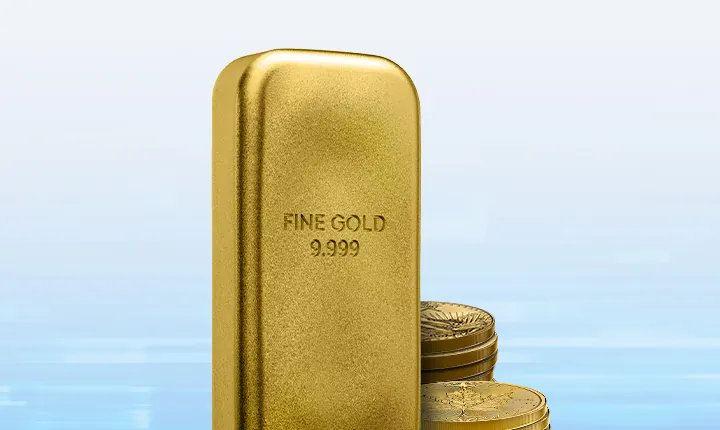
With a physical-backed model, your holding is matched one-to-one by vaulted gold bars that meet LBMA Good Delivery standards — the same 995-to-999.9 fine, professionally refined bars that banks and central banks trade. The metal is fully allocated to you (segregated and identifiable, not merely a claim on a pool) and insured. Crucially, you can usually redeem your balance for physical coins or bars and take delivery if you choose. This is the model OneGold uses, and it is the closest digital equivalent to owning bullion outright.
ETFs and Exchange-Traded Products
Gold ETFs and exchange-traded commodities (ETCs) trade like shares on the London Stock Exchange, Xetra or SIX. They are convenient and highly liquid, but you own a security rather than metal, and you pay an annual expense ratio. Some are physically backed and a minority are synthetic. For a fuller treatment of the trade-offs, see gold ETFs vs gold and our roundup of the best gold ETFs. The table below shows representative products and their approximate ongoing charges.
| Instrument | Example ticker | Approx. annual cost | What you own |
|---|---|---|---|
| US-listed gold ETF | GLD | ~0.40% | Shares in a trust holding gold |
| Lower-cost gold ETF | IAU | ~0.25% | Shares in a trust holding gold |
| Swiss-vaulted gold ETC | SGOL | ~0.17% | Shares backed by allocated gold |
| Deliverable gold ETF | OUNZ | ~0.41% | Shares redeemable for physical gold |
| Physical-backed digital gold | — | Storage fee (often ~0.1–0.5% p.a.) | Allocated, insured vaulted metal |
Expense ratios are approximate and change over time; always check the latest factsheet. UK and EU investors typically access UCITS-eligible gold ETCs (for example Invesco Physical Gold or iShares Physical Gold) rather than US-listed funds, which can carry trading and reporting frictions for European accounts.
Derivatives: Futures, CFDs and Spread Bets
Leveraged products let you control a large position with a small deposit, amplifying both gains and losses. They are tools for short-term speculation, not for building a long-term gold holding, and they carry overnight financing costs and the risk of margin calls. Most retail investors seeking a store of value should avoid them. If your goal is wealth preservation, a physically backed approach is almost always the better fit — our overview of the best way to buy gold explains why.
What to Look for in an Online Gold Trading Platform
Because gold sits firmly in the YMYL (Your Money or Your Life) category, the quality of the platform matters as much as the price of the metal. Use the following checklist when comparing providers.
- Regulation and compliance: Confirm the operator is authorised in a recognised jurisdiction and follows AML/KYC rules. For UK investors, look for a clear legal entity and transparent terms.
- Allocated, audited metal: Insist on fully allocated, segregated bullion that is independently audited, not unallocated pooled claims. LBMA Good Delivery bars are the gold standard.
- Vault jurisdiction and insurance: Reputable platforms vault in the UK or Switzerland — politically stable, well-regulated centres, with US and Canadian vaulting also available — and provide all-risk insurance.
- Transparent fees: Compare the buy/sell spread, any storage fee and withdrawal or delivery charges, not just headline pricing.
- Real-time pricing and liquidity: You should see live quotes tied to the gold price and be able to sell quickly at a fair bid.
- Usable tools: Recurring purchases, limit orders and price alerts help you execute a plan consistently.
- Multi-currency support: The ability to fund and price in GBP, EUR or CHF avoids unnecessary conversion costs for European investors.
Fees, Spreads and a Worked Example
The headline metal price is rarely what you pay. The spread (the gap between the buy and sell price), any premium over spot, and ongoing storage all erode returns. Consider a worked example. Suppose you invest £10,000 with a platform charging a 1% round-trip spread and a 0.30% annual storage fee, and hold for three years while the gold price is flat. You would lose roughly £100 on the spread plus about £90 in storage — around £190, or under 2% over three years. The same £10,000 bought as physical coins from a dealer might carry a 4–8% premium on purchase alone, plus a similar discount when you sell. Low spreads compound powerfully over time, which is why cost transparency belongs at the top of your checklist.
EU and UK Tax and Vaulting Considerations
Investment gold is VAT-exempt across the EU and the UK. Under the EU's special scheme for investment gold and the equivalent UK rules, bullion bars and investment-grade coins that meet the purity thresholds are free of VAT. This is a meaningful structural advantage over other metals: vaulted silver and vaulted platinum can attract VAT (typically 20% in the UK and varying rates across the EU) unless held in a duty-suspended vault. The practical upshot is that storing white metals inside an insured vault, rather than taking delivery, can preserve the VAT efficiency that gold enjoys automatically.
UK investors should also note that certain UK legal-tender coins, such as Britannias and Sovereigns, are exempt from Capital Gains Tax — a reason some prefer coins to bars despite the higher premium. Tax treatment depends on your country of residence and personal circumstances, and rules change, so confirm the current position with a qualified adviser.
Choosing a Vault Jurisdiction
Where your metal sits affects both security and your ability to access it. The UK (London) offers deep LBMA liquidity and strong legal protections, and London sits at the heart of the global bullion market. Switzerland (Zurich) is prized for political neutrality and a long bullion tradition. For European investors, OneGold emphasises these two centres, while US and Canadian vaulting is also available. Diversifying across jurisdictions, or simply choosing one whose laws you trust, is a sensible part of due diligence. Good platforms disclose the vault operator and let you verify holdings.
Automated Trading and Price Alerts
One advantage of trading gold online is automation. Recurring purchases let you average into a position on a fixed schedule, smoothing out volatility rather than trying to time the market. Limit orders let you set a target price and have the trade execute automatically when the market reaches it — useful for disciplined accumulation. And a gold price alert app can notify you when gold crosses a level you care about, so you never need to watch screens all day. Some platforms also offer a switch and save feature, letting you move between metals to manage cost or rebalance without redeeming to cash.
Putting It Together: How to Choose Wisely
For a European or UK investor whose goal is to own gold as a long-term store of value, a platform offering fully allocated, insured, LBMA Good Delivery metal — vaulted in a stable jurisdiction, priced transparently in your home currency, and redeemable for physical bullion — will usually beat both high-premium dealer coins and securities you never actually own. OneGold provides fractional ownership of allocated vaulted gold with real-time pricing, low spreads and the option to redeem, which is why it stands out among online options. To see how it compares with simply buying bullion, read where can I buy gold.
Risk and Disclaimer
Gold can fall as well as rise. It pays no income, its price can be volatile over short periods, and past performance is not a guide to future returns. Currency movements between GBP, EUR, CHF and the US dollar (in which gold is globally priced) add a further layer of risk for European investors. This article is general information for education only and is not financial, investment or tax advice. Consider your own circumstances and consult a qualified, regulated adviser before making any decision.
Frequently asked questions
Is online gold trading safe for UK and European investors?
Do I pay VAT when buying gold online in the EU or UK?
Is it better to trade a gold ETF or buy physical-backed digital gold?
Where should my gold be vaulted?
Can I take physical delivery of gold I buy online?
What fees should I watch out for?
Ready to start investing?
Open a free OneGold account and own allocated, fully insured metal in minutes.
Start Investing