How to Invest in Gold for Beginners


Why Invest in Gold?
Gold has held value for thousands of years, surviving wars, currency collapses and banking crises while paper assets came and went. For European and UK investors, the appeal is rarely about getting rich quickly. Gold is a defensive asset: a way to preserve purchasing power and reduce the volatility of an overall portfolio. It tends to move independently of equities and bonds, which is precisely why even a small allocation can smooth returns when other markets fall.
Before committing capital it helps to be clear about what gold can and cannot do. It produces no dividend or interest, so its return depends entirely on price appreciation. What it offers instead is balance, liquidity and a store of value that no central bank can print into existence.
What Gold Does in a Portfolio
- Inflation hedge: over long periods gold has broadly tracked the rising cost of living, helping protect real wealth when the pound, euro or franc loses purchasing power.
- Diversification: gold's low correlation with stocks and bonds can lower overall portfolio volatility, even though gold itself is volatile in isolation.
- Crisis insurance: demand for gold typically rises during recessions, geopolitical shocks and currency instability.
- No counterparty risk (when physical): a bar of allocated metal is not a promise from a bank or company; you own the asset outright.
Understanding Gold: The Basic Terms
A handful of terms come up constantly. Understanding them is the difference between buying confidently and overpaying. The single most useful number is the spot price, the live wholesale price of one troy ounce of gold. You can follow the live gold price in GBP, EUR or CHF before you buy, and our guide to spot gold explains how that benchmark is set.
- Spot price: the current global market price for one troy ounce of pure gold, quoted continuously during trading hours.
- Troy ounce: the standard unit for precious metals, equal to approximately 31.1 grams (heavier than a normal ounce).
- Premium: the amount charged above spot to cover fabrication, distribution and dealer margin. Small coins carry higher premiums than large bars.
- Spread: the gap between the buy price and the sell price. A tight spread means you lose less when you eventually sell.
- Allocated gold: specific bars or coins legally assigned to you and segregated in a vault, so they never sit on a provider's balance sheet.
- LBMA Good Delivery: the global quality standard for wholesale bars, ensuring purity and provenance are independently verified.
Ways to Invest in Gold
There is no single "best" way to own gold; the right route depends on how much you are investing, whether you want to hold the physical metal, and how easily you need to buy and sell. The table below compares the main options a UK or EU beginner will encounter. For a fuller treatment, see our guide on the best way to buy gold.
| Method | Typical cost | Liquidity | Owns real metal? | Best for |
|---|---|---|---|---|
| Physical coins & bars | Premium ~3-8% over spot plus storage/insurance | Moderate (must sell to a dealer) | Yes, in hand | Long-term holders who want possession |
| Vaulted / digital gold | Low premium, small annual storage fee (~0.1-0.5%) | High (sell online in seconds) | Yes, allocated & segregated | Most beginners building a position |
| Physically-backed ETFs | Expense ratio ~0.12-0.40% per year | Very high (trades like a share) | Indirectly, via the fund | Investors using a brokerage account |
| Mining shares & funds | Brokerage fees plus fund charges | Very high | No (equity exposure) | Those seeking leverage to the gold price |
Physical Gold: Coins and Bars
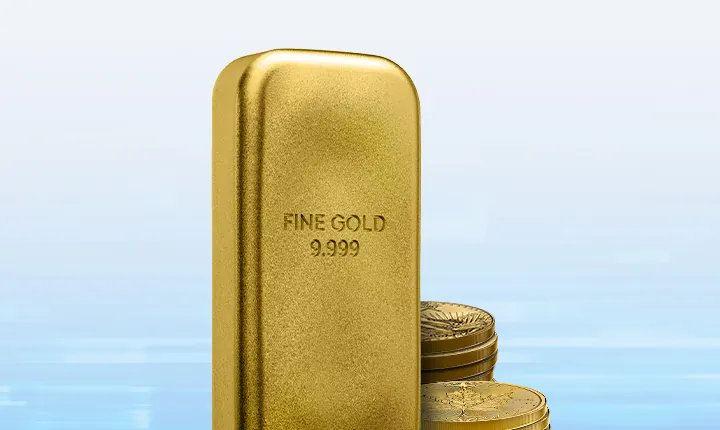
Owning physical gold outright is the most direct form of ownership. Sovereign coins such as the Britannia or Krugerrand are highly recognisable and liquid, while larger bars (100g, 1kg) carry lower premiums per gram. The trade-offs are storage, insurance and the spread you pay when selling back to a dealer. If you want to take possession, our overview of where to buy gold covers reputable routes.
Vaulted (Digital) Gold
Vaulted gold combines real ownership with the convenience of online trading. You buy allocated metal stored in a professional, audited vault; the gold is legally yours and segregated, but you avoid the headaches of home storage and the wide premiums of small coins. With vaulted gold you can typically start with very small amounts, buy and sell at prices close to spot, and choose your storage jurisdiction. For many beginners this is the most practical entry point.
Gold ETFs and Mining Shares
Exchange-traded funds let you gain gold price exposure inside an ordinary brokerage or ISA account. Physically-backed funds hold allocated bars on your behalf; the main difference between products is the annual expense ratio.
| Ticker | Fund | Approx. expense ratio |
|---|---|---|
| GLD | SPDR Gold Shares | ~0.40% |
| IAU | iShares Gold Trust | ~0.25% |
| SGOL | abrdn Physical Gold Shares | ~0.17% |
| OUNZ | VanEck Merk Gold (redeemable for metal) | ~0.25% |
UK and EU investors should note that many US-listed ETFs are not freely available to retail buyers under MiFID/PRIIPs rules; European equivalents (often UCITS funds) may be more appropriate. ETFs are convenient but you do not hold the metal directly. Weigh the trade-offs in gold ETFs versus physical gold and our list of the best gold ETFs. Mining shares and funds offer leveraged exposure but introduce company, operational and equity-market risk that pure gold does not carry.
Tax and Storage in the EU and UK
One advantage that often surprises newcomers is the tax treatment. Across the EU and the UK, investment gold is exempt from VAT under the EU VAT Directive (and equivalent UK rules), provided the bar or coin meets the purity and recognised-coin criteria. This is a meaningful edge over silver and platinum, which can attract VAT of 20% or more in many jurisdictions and therefore start at a structural disadvantage.
Other taxes may still apply. In the UK, certain legal-tender coins such as Britannias and Sovereigns are also exempt from Capital Gains Tax, whereas bars and foreign coins are not. Tax rules vary by country and change over time, so confirm your position with a qualified adviser.
Where Your Gold Is Stored
If you choose vaulted or allocated gold, the storage jurisdiction matters for both security and peace of mind. For European investors the most established centres are the United Kingdom (London) and Switzerland (Zurich), each home to high-security, independently audited vaults, with vaulting in the United States and Canada also available. London sits at the heart of the global bullion market, while Switzerland brings a long tradition of secure precious-metals storage. Look for metal held to LBMA Good Delivery standards, fully insured, and segregated so it is recognisably yours rather than pooled. Being able to choose where your metal sits, and to take delivery if you ever wish, is a hallmark of genuine allocated ownership.
A Step-by-Step Guide to Buying Your First Gold
Once you understand the basics, the process is straightforward.
- Define your goal: decide whether gold is for long-term preservation, diversification or crisis insurance. This shapes how much to allocate, often 5-10% of a portfolio.
- Choose your format: physical coins, vaulted gold or an ETF, based on the comparison above. Our review of the best online gold trading platform can help you compare providers.
- Select a reputable provider: check regulation, vault auditing, insurance and that metal is allocated rather than pooled.
- Open and fund an account: complete identity verification and fund in your home currency (GBP, EUR or CHF) to avoid conversion costs.
- Make your first purchase: buy a small amount first to understand the spread and confirmation process before committing more.
- Monitor and manage: track your position against the live price and rebalance periodically rather than reacting to short-term swings.
Common Mistakes Beginners Make
- Overpaying on premiums: buying tiny coins or limited-edition products can mean paying double-digit percentages over spot. Compare premiums before buying.
- Using unverified dealers: stick to established, regulated providers with audited storage and transparent buy-back pricing.
- Ignoring the spread: a wide gap between buy and sell prices can quietly erode returns, especially for short holding periods.
- Neglecting storage and insurance: home storage carries theft and loss risk that insured vaulting removes.
- Trying to time the market: attempting to trade short-term moves usually underperforms a steady, long-term allocation.
Tools That Make Investing Easier
A few simple features can improve your results. Limit orders let you set the exact price at which you want to buy or sell, so you are not glued to a screen. If your circumstances change, services such as redeeming your holdings for physical delivery give you flexibility. And because gold and other metals move differently, some investors later diversify into platinum or silver once they are comfortable with the basics.
Final Thoughts and a Word on Risk
Gold investing does not need to be complicated. Start small, choose a regulated provider with allocated, insured storage, and treat gold as a long-term anchor rather than a quick trade. A modest allocation, bought at sensible premiums and held patiently, is how most successful gold investors begin.
Important: this article is educational and does not constitute financial, tax or investment advice. The price of gold can fall as well as rise, and past performance is not a guide to future returns. Consider your own circumstances and consult a qualified, regulated adviser before investing.
Frequently asked questions
Do I have to pay VAT when I buy gold in the UK or EU?
How much of my portfolio should be in gold?
Is it better to buy physical coins or vaulted gold as a beginner?
What is the difference between the spot price and the premium?
Are gold ETFs the same as owning physical gold?
Where is allocated gold safest to store?
Ready to start investing?
Open a free OneGold account and own allocated, fully insured metal in minutes.
Start Investing